
Workplace Wisdom from Grief
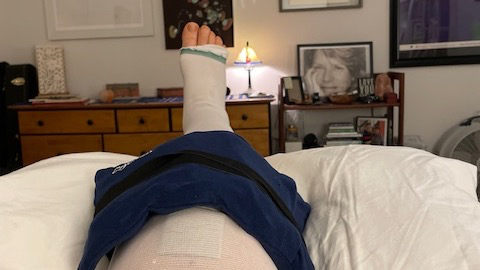
The holidays can be an incredibly emotional trigger and a time of isolation after the death of a loved one. My wife died in 2022. I also faced the loss of her oldest friend (they had known each other for 52 years) and my mother-in-law; both died last year. As I was contemplating how to cope with the universe's wicked hat trick, having total knee replacement surgery a week before Christmas seemed the perfect option in my dark world.
I was not sure what to expect during recovery, but you can be sure it wasn't a lesson in how the combination of these powerful experiences would shape how I looked at my position as a communications manager or my role in the workplace.
I wanted to share this information in case such observations could be beneficial to others who believe whatever cards life has dealt them seem to come for no good reason. (Hint, hint: No growth ever comes when life is perfectly comfortable. Thank you, Jarie Bolander.)
Benefits in disguise
You have to learn to sit with your pain. The agonizing hurt that accompanies loss or surgery isn't the same, but it's similar. Both take the time it takes to heal, and that timeline is going to be different for each person; it doesn't matter if another person was also widowed or the same joint was replaced. You progress at your pace. It will ebb and flow and hit you in waves. However, this heavy lift builds patience, understanding, and resilience. One also gains empathy in ways you may never have before. These learned qualities are now shining a light on coworkers and projects in a way I didn't recognize before last week. Having a fresh perspective in the workplace is vital to decision-making and innovation.
You are forever scarred. The person-size hole that's in your heart and the giant incision made on the leg stay for the rest of your days. You can choose to hide it away or share it openly. I've found that developing unabashed authenticity helps build connections and widens one's network in life and in the workplace. Research shows authentic leaders are transparent, self-aware, and reliable, which can lead to better team performance and employee engagement.
You have to figure things out. Because no one will experience your grief as you experience it, you must discern ways to cope that work best for you. Equally, that surgeon can put in the most state-of-the-art medical device and sew the skin back together perfectly, but that's where their involvement ends. You must learn to problem-solve to heal and accomplish daily tasks. One builds tenacity with a more strategic and adaptable approach to achieving a goal, like getting yourself off the toilet at 2 a.m. The other benefit is persistence because I can tell you from experience that you continue to try despite difficulty, or you end up living on the toilet. Literally and figuratively, being there is not an ideal place to be in your career.
You develop a growth mindset. Professor Carol Dweck, known for her work on motivation and mindset, found that basic abilities can be developed through dedication and hard work; your knowledge and talent are just the starting point. However, a growth mindset "creates a love of learning and a resilience that is essential for great accomplishment." In so many of the support groups I'm in, I've found that grieving people crawl through this existence in the beginning. They knew who they were with their most beloved person, but we all start at ground zero and slowly work the way up, essentially learning every day as it becomes necessary to bushwack a path. In some cases, getting up off the couch or bed is monumental. It's a great thing when you're able to shower and dress while mourning. Those tasks are equally worth celebrating after knee surgery. In both cases, moving forward is possible with baby steps. In the workplace, viewing challenges as learning opportunities, taking calculated risks, and continuously improving leads to increased innovation, adaptability, and ultimately, better business outcomes.
So, the next time you find yourself on the short end of the stick, no matter how painful, take a moment to be grateful. (Yes, I, too, thought it was crazy when I was told that one day. Thank you, Austyn Wells.) But this bump in the road, no matter how large, is there for you to learn how to navigate the journey ahead in your life or your job. I promise. Is it hard? Heck, yes. I still miss Wendy every minute and sometimes wish this was not a happening. However, it’s amazing to recognize how much you can learn when you must.