
Naming the Pain Can Bring Relief
Back in the early 2000s, actress Selma Blair spent years experiencing frightening neurological symptoms. Then, in 2018, she was diagnosed with multiple sclerosis. She said the diagnosis was devastating, but it also finally gave a name to what had been happening to her. After years of uncertainty, she knew she wasn't imagining it. There was an explanation.
Actress and singer-songwriter Demi Lovato had a similar experience. She spent years struggling with extreme depression and other symptoms without understanding why she felt the way she did. In an interview with Healthline, she said that when she was diagnosed with bipolar disorder, she was “so relieved that I had finally had a diagnosis.” It finally gave her an explanation for experiences that had previously felt confusing and frightening. The illness didn't become less serious because it had a name. But the uncertainty became less powerful.
Naming Grief as Grief
I believe naming grief works the same way.
Many people tend to associate grief almost exclusively with death. Someone dies, we grieve. It’s the story we learn. You become bereaved and feel deep sadness and cry.
But grief is not a response reserved for death. It is the natural human response to loss. Any loss.
And loss comes in many forms.
Of course, it absolutely can be the death of a loved one. But it can also become present after:
The loss of a beloved pet
A child leaves home for college
A marriage or friendship crumbles
A job ends due to layoff, firing, or retirement
A natural disaster like a wildfire, flood, tornado, or hurricane wipes out a community
Your house is burglarized and something precious, like your mother’s wedding ring or your grandfather’s pocket watch, is stolen
Life suddenly changes. That dream, the future, your sense of self, or the feeling of comfort in your surroundings is gone.
Whatever you imagined could have or should have been is lost.
Lost. There’s the keyword.
When those losses aren't socially recognized as things we are "supposed" to grieve, the experience can become what is known as disenfranchised grief.
And that's where things can get confusing. Because if you don’t think grief is what you’re experiencing, you may not understand what’s going on or why your emotions are all over the place.
You may find yourself:
Irritable
Anxious
Exhausted
Distracted
Forgetful
Angry
Unable to concentrate
Disconnected
Sleeping too much or hardly sleeping at all
You recognize that you are “not yourself” and may even believe you’re going crazy. You may think, “What's wrong with me?”
Maybe nothing is "wrong" with you.
Maybe, because you’ve been through a loss that has impacted you, those feelings you are feeling are – let’s say it together – GRIEF.
What Others Might Say
As of this writing, my beloved wife has been dead for four years. One of the best lessons I’ve learned in this short time: You do you.
Your feelings about a significant loss are yours. Other people may not understand. They may say things like:
“Think of this as an opportunity.” After you are laid off from a job you held for a decade.
“You can always get another cat.” After your beloved Mr. Whiskers dies of feline leukemia.
“It’s just a dog.” After the pup you’ve had since you were a teen dies after 15 years.
“You have two other kids at home; what’s the big deal?” After your eldest daughter decides to go to college in Scotland.
Therapists will tell you: two things can be true.
You can recognize a career change may be good while also missing your former colleagues and the work you got to do every day.
You can get another pet, but you can miss the unique companionship you had with your fur baby.
You can celebrate your daughter’s success, be thrilled about your child’s new chapter, and be focused on the children at home while also missing her presence at the dinner table each night.
It’s possible to find joy when you’re grieving.
Like any grief, it takes the time it takes to go along that unique journey. But those feelings you have? They are valid. Mostly because they are yours, and you are allowed to feel the feels (as the kids say).
What’s in a Name?
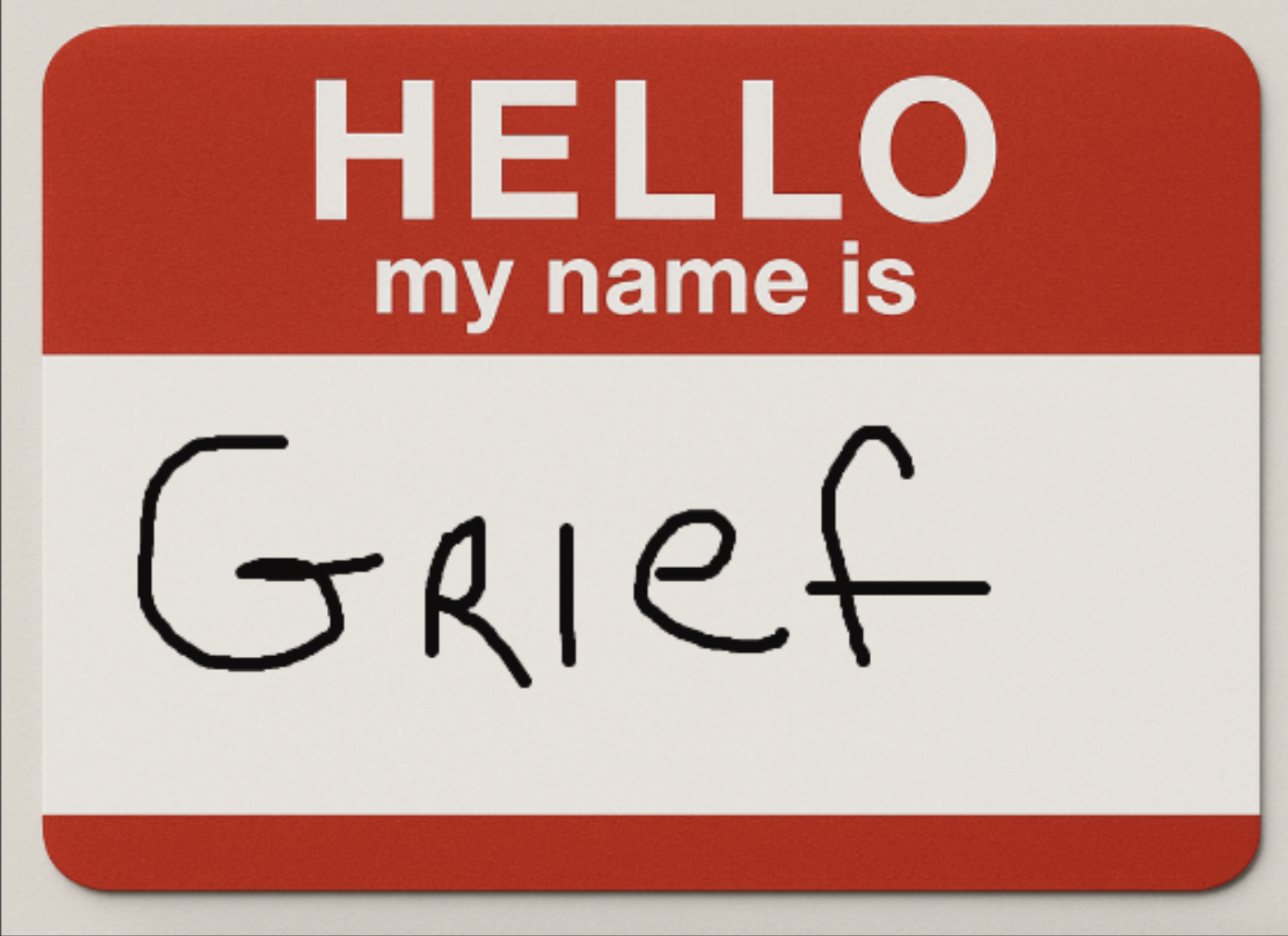
When you don’t stick a name tag on those awkward and confusing feelings and don’t name grief as grief, you can end up treating the symptoms without understanding the source.
In general, we might label ourselves simply as anxious, irritable, depressed, or having a sleep or eating disorder. Sometimes those things may be true. However, reaching out for professional support after you experience a loss is absolutely appropriate. And when you do, be clear that you’re noticing symptoms in yourself after the loss happened.
After Wendy died (and then the dogs, and Wendy’s oldest friend, and my mother-in-law, and then I moved twice in two years and changed jobs), I told every doctor I saw what happened. It mattered for the treatment of my mental and physical health.
Thus, if you’ve gone through any kind of loss, ask yourself:
What have I lost?
How is this making me feel?
Could I be grieving it?
Keep in mind, naming grief doesn't make it go away. Just as a diagnosis of MS doesn't make MS disappear, calling grief by the proper name doesn't magically make the pain stop.
But naming it can change your relationship with what you're experiencing, and you can take the baby steps it takes to process it.
It can replace “What's wrong with me?” with “Of course I'm hurting. Something important was lost.”
That recognition brings validation to your heartache. It gives you permission to feel what you're feeling. And, importantly, it can help you begin to figure out what you need to move forward in a healthy way. Maybe you:
Need to talk about it
Create a ritual around the loss
Reconnect with people who understand
Seek professional support
And maybe you simply stop judging yourself for not being "over it" yet because you’re handling it “wrong.”
You can't tend to a wound you don't recognize. So, taking a first step toward healing is a name game. It’s called grief.
And you are not crazy!
You are grieving.
Don’t miss future blog posts; sign up here and get them delivered directly to your email box.
Want to talk about this more? Want me to speak to your group or organization? Reach out!