
Stacey S. - California
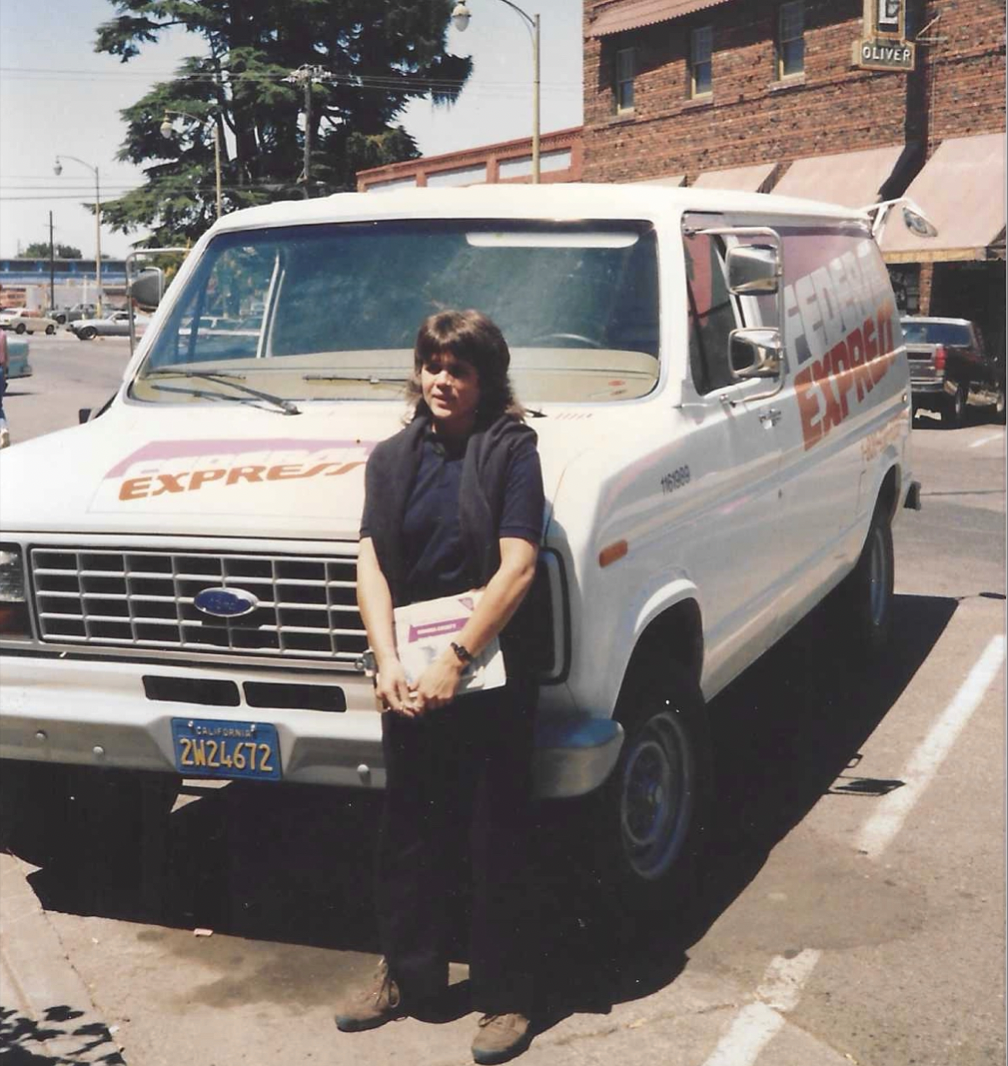
Lesly Taboada-Hall on her first day of work with FedEx.
Lesly and I met as college students in 1983. As young adults, we grew up together and created a love-filled life. We went from living in a bus and scraping a living to getting jobs that allowed us to buy a home that we rehabbed and furnished. In that house, we welcomed two children. Lesly and I raised them and were involved with their schools and scouts and projects. Dozens of their friends spent time in our welcoming space. By any other standards, we were a typical American family with a boy and a girl, pets and everything that comes with living day to day.
However, we met long before same-sex marriage was legal in this country. So, we didn’t marry then. And, as so many busy parents do, we got lost in the many tasks of a full life. Having a wedding ceremony fell off our radar. Packing lunches, tending to homework, mowing the lawn, painting the children’s bedroom, hosting the holidays, and working our jobs took priority, even though San Francisco began issuing marriage licenses in 2004.
For 26 years, Lesly was dedicated to her job as a driver for FedEx. In that time, she logged hundreds of thousands of miles, even during the coldest and rainiest days in the Bay Area. She delivered thousands of packages and built trust with customers along her route. She often left our home before sunrise and returned after it set. When opportunities to be a leader arose, she stepped into those positions.
She also participated in the FedEx Corporation Employees’ Pension Plan, an ERISA-governed defined-benefit plan that provided a mandatory survivor annuity (including a qualified preretirement survivor annuity) payable to a vested participant’s “surviving spouse” if the participant died before retirement.
Colleagues loved her. Customers loved her. I loved her. Deeply.
When it was discovered that the lingering cough she had one winter was actually a symptom of endometrial cancer doctors found after tests, we were devastated. We tried everything medically possible to cure her.
Not knowing how long she might have, it was so important to us to be joined together as a couple, even if marriage was not yet legal. Thirty years after we’d first fallen in love, friends and family gathered around Lesly’s hospital bed in our room and we exchanged vows. She was my wife. I was hers.
And then cancer took her the next day.
She died June 20, 2013, six days before the Supreme Court struck down a key part of the Defense of Marriage Act (DOMA), which barred federal recognition of gay marriage. The timing of it all couldn’t have been more heartbreaking.
FedEx, like many other companies, used DOMA to determine who qualified as a legal spouse for the purposes of paying survivor benefits. Because Lesly died before the Supreme Court ruling, FedEx determined that I was not eligible as a spouse to receive the main pension benefit.
There I was, newlywed but newly widowed, with two teenagers who were still in school and none of us allowed to benefit from the hard work and benefits Lesly had earned over the years for our family.
This never would have happened to a straight couple.
Sure, FedEx said in a statement that Lesly was a valued employee and “we are saddened by her passing.” However, the company also said that my claim was “carefully reviewed, and while we are sympathetic to her situation, we are required by federal law to apply the pension plan rules equally to all participants.”
Thus, it was necessary to sue FedEx.
I’m still grateful to the National Center for LGBTQ Rights (NCLR), Feinberg Jackson Worthman & Wasow, the Civil Rights Education and Enforcement Center, and the Birnie Law Office, who took the case.
Ultimately, the Ninth Circuit Court of Appeals allowed the ERISA claim to proceed, rejecting FedEx’s reliance on the plan terms that excluded me at the time. FedEx ultimately settled the case, providing me and the children the benefits. However, it wasn’t just a win for our family, Schuett v. FedEx Corporation also marked a significant victory for equal treatment under employee benefit plans.
Because this is in place, I’m so glad others don’t have to suffer through such injustices when they are grieving the most profound loss of their spouse.
If you’re interested, you can read about the case here: https://www.casemine.com/judgement/us/59145cecadd7b049341f098c
Do you also have a story to share about how you found LGBTQ+ grief to be different? Fill out the form on the home page.
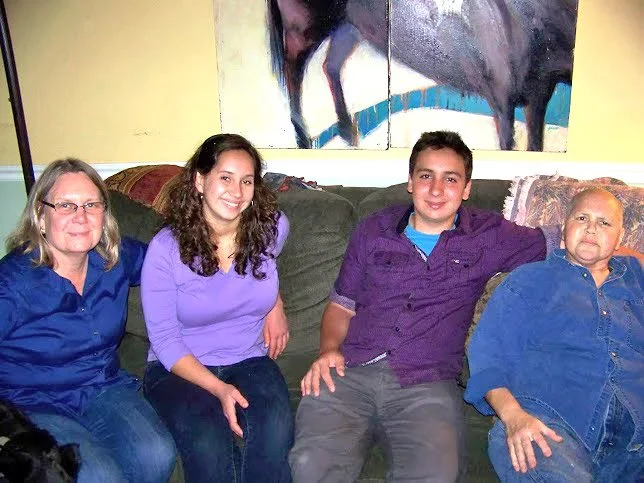
Stacey Schuett (L) and Lesly Taboada-Hall (R) with their children.