
Death Doulas and How They Can Be a Benefit
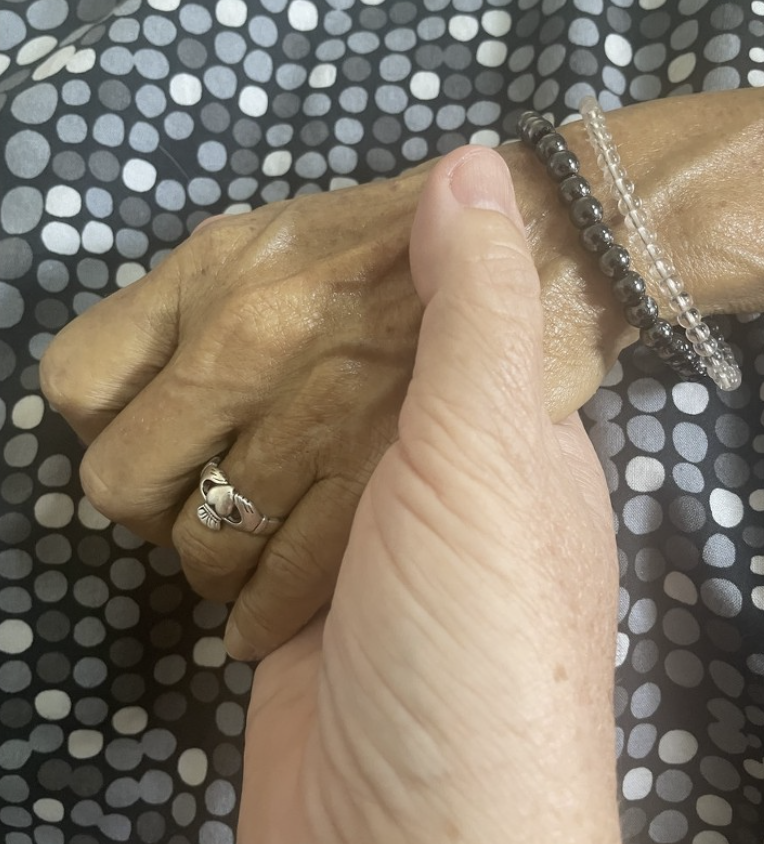
In early October 2022, I took Wendy to her oncologist where we were informed that the insurance company had rejected the blood work her doctor needed to better target the tumors. We were flabbergasted and felt we had to do whatever was necessary, especially if the medical team thought it would be helpful. We told her doctor to do the tests any way. We’d pay the $5,000 out of pocket. What choice did we have?
However, Wendy had other concerns, and I opened my notebook to pose the questions we’d written down. As I began to ask, the oncologist raised her hand and shushed me, and then turned to Wendy.
“I want to know,” she asked Wendy “do you want to die at home or at the hospital?”
We were petrified and fell silent. I grabbed Wendy’s hand.
“I want to die in Chris’ arms,” Wendy responded.
It was a simple and, quite frankly, a romantic answer to give. But the reality of that responsibility as a sole caregiver is a heavy, heavy lift.
The mission of this website is to provide information and guidance on topics I wish had been available to me. And death doulas? Well, I definitely did not know about them until after Wendy died.
What is a Death Doula?
As modern medicine moved dying out of the home and into hospitals during the 20th century, many families lost the traditions, knowledge, and support systems that once guided them through the end-of-life journey.
It will come as no surprise to many that if given the option, people will choose dying at home instead of a hospital, just like my wife did.
Thus, the death doula became a profession that helped fill the gap for such instances.
These non-medical professionals provide emotional, practical, spiritual, and educational support to the dying, as well as to their families and caregivers. Much like birth doulas help with the difficult task of coming into this world, an end-of-life doula helps with the difficult exit.
How a Death Doula Can Help
There are many resources these kind people bring to your table, including:
Emotional support. Facing death can bring a wide range of emotions for both the dying individual and their loved ones. Death doulas provide a steady, compassionate presence, offering comfort, reassurance, and a listening ear. Their support can be especially valuable for families who have little experience with the realities of dying and end-of-life care.
Guidance and advocacy. Death doulas help families better understand what to expect as death approaches. They can explain common physical and emotional changes, answer questions, and support informed decision-making. They also help ensure that a dying person's wishes and values remain central to their care. (This can be extremely useful when family members try to take control and change plans.)
Vigil support. Many end-of-life doulas offer to sit with a dying person during their final hours or days when loved ones cannot be there. Their simple presence can provide comfort, companionship, and peace of mind, helping ensure that no one has to face death alone.
Practical assistance. The end-of-life period often involves numerous logistical tasks. Death doulas can assist with advance care planning, organizing important documents, coordinating with hospice providers and caregivers, and helping families navigate funeral or memorial arrangements. This practical support can ease some of the burden during an already difficult time.
Legacy projects. Many dying people wish to leave behind something meaningful for family and friends. Death doulas often help create legacy projects such as letters, recorded stories, memory books, videos, or other keepsakes that preserve memories and honor a person's life and values.
Why Choose a Death Doula?
Choosing to work with a death doula is a personal decision that may include:
Individualized support. Every person's end-of-life journey is unique. Death doulas tailor their services to reflect the individual's preferences, values, and goals, helping create a more personal and dignified experience.
Whole-person care. While medical teams focus primarily on physical symptoms and treatment, death doulas take a broader approach. They support emotional well-being, spiritual needs, and practical concerns, helping address the full range of challenges that can arise at the end of life.
Support for family and friends. Being a caregiver at the end of life can be emotionally and physically exhausting. Death doulas provide guidance, education, and reassurance, helping family members feel more prepared and less overwhelmed.
Peace of mind. Having a dedicated professional available to offer consistent support can bring comfort to everyone involved. Death doulas help ensure that individuals and families feel cared for, informed, and less alone during a significant life transition.
Encouraging meaningful conversations. Discussions about death can be difficult, even among close family members. Death doulas help create a safe space for these conversations, encouraging honest communication about wishes, fears, and expectations while helping loved ones prepare for what lies ahead.
How to Find a Death Doula
As awareness of end-of-life care continues to grow, death doulas are becoming an increasingly valuable resource. I often think about those last days with my wife and how helpful it would have been to have someone assist me with the task for which there is no guidebook.
By providing compassionate, holistic support, death doulas can be there to navigate one of life's most profound experiences with greater understanding, comfort, and dignity.
The International End-of-Life Doula Association (INELDA) has a directory allowing you to search by location. Doulas are listed in Canada, Chile, Ecuador, Germany, Ireland, Italy, Japan, Mexico, New Zealand, Portugal, Puerto Rico, Republic of Korea, Singapore, Spain, Switzerland, Trinidad and Tobago, United Kingdom, U.S. Virgin Islands, and the United States. https://inelda.org/