
Emotional Scaffolding
Grief has a way of isolating you. I didn’t have a support system after Wendy died, but even for people who may be surrounded by others who are helpful, there can be an invisible gap between their empathy and your lived experience. This is because profound loss reshapes your world in ways that are difficult to explain, and even harder for others to fully grasp unless they’ve been there themselves.
That’s one of the reasons grief can feel so lonely. I remember leaving our condo one day to walk the dog after Wendy was gone, and I was amazed that other people were just continuing to live their lives. They were riding bicycles, talking on their phones, and driving their cars. In the oddest way, it seemed bizarre that the world continued after my heart was shattered. Everything became surreal.
When I finally got into a grief group, those were my people. They’d lost their sons, their mothers, their most beloved. They all immediately got it like no one else could, not even the most well-meaning friend offering food or late-at-night conversation.
As I began in the group, my first thought was that I couldn’t possibly participate in the “right” way. What could I bring beyond my brokenness? Turns out, you just need to show up. No one expects anything.
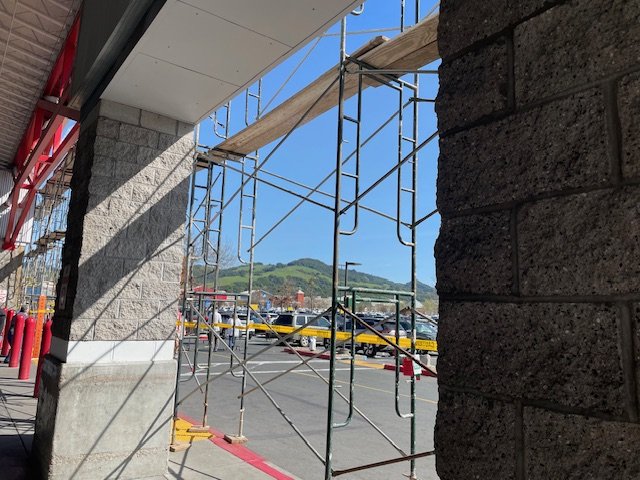
In time, I recognized something in this group: we were each other’s emotional scaffolding. Think about it, scaffolding is a temporary structure used when you’re rehabbing or building something new. In grief, both analogies actually work. But the scaffolding is there when you need it, and it can be moved or put back in place as needed later. It can also go away when you feel what you’ve built stands solidly as you moved forward in your grief journey.
When I meet new widows or widowers, I recommend they find a grief group somewhere because as non-grievers around you begin to move on faster than you’re ready for, you can feel even more alone in your experience.
This is where that emotional scaffolding can become not just helpful, but transformative.
There’s something profoundly different about sitting in a room (or virtual space) with people who truly understand and not in a general, sympathetic way, but in a deeply personal, lived way. In a grief support group, you don’t have to explain why a certain date feels heavy, why a random memory brought you to tears, why you left a half-full grocery cart in the middle of the aisle and left the store, or why “moving on” isn’t a straightforward concept. Others already understand those nuances because they’re navigating them too.
For LGBTQ folk, finding other men who lost their husbands or women who lost their wives means everything. The disenfranchised grief and the secondary losses you experience that make you feel like you’re the only person who has ever felt that (and maybe you’re crazy or wrong), become validated. That shared understanding creates a kind of safe space that’s hard to find elsewhere.
Group therapy is more than just talking it out. It’s also about hearing someone else put words to feelings you’ve struggled to articulate. That alone can be incredibly grounding. It also provides perspective. While every grief journey is unique, witnessing how others cope, adapt, and find moments of meaning can gently expand your own sense of what healing might look like.
And the bonus in this: a subtle but powerful shift that happens when you’re not just receiving support but offering it. Your story, your struggles, and even small steps forward may help someone else feel less alone. Thus, if you feel as I did on day one (that I couldn’t contribute anything but sadness), well, a sense of connection and purpose becomes a meaningful part of the healing process.
I have found that group therapy and the people who make up my emotional scaffolding haven’t rushed my grief or even tried to fix it. Instead, it just stays in place and holds space for it. And while it hasn’t taken the pain away, the challenges I’ve had to face as I’ve rebuilt have been a bit less daunting. I haven’t yet removed the scaffolding completely, but there are parts of me that are standing strong because of it.
Don’t miss future blog posts; sign up here and get them delivered directly to your email box.