Who Gets to Decide How We’re Remembered?
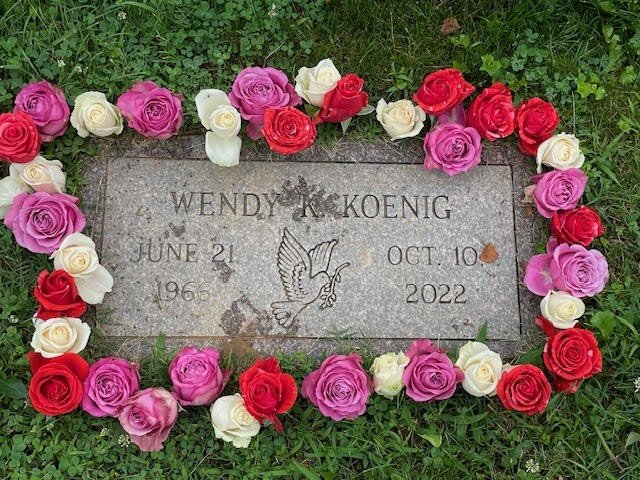
The topic of tombstones isn’t widely examined in peer-reviewed clinical research. You won’t find many studies parsing the psychology of headstone inscriptions. But the emotional impact of memorials is well documented in grief counseling, bereavement literature, and the psychology of loss. Choosing what is carved in stone is not merely administrative. It is an act of meaning-making; it’s part of an emotional journey toward expression, reflection, and memory.
My wife, Dr. Wendy K. Koenig, understood that better than most.
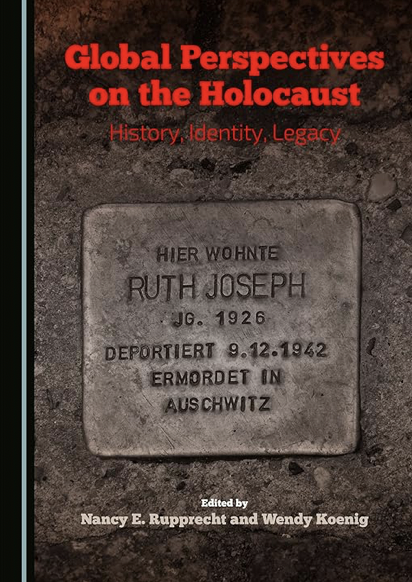
Wendy was an art history professor and Holocaust scholar. She published several books that examined how the Holocaust was lived as well as how it is remembered, commemorated, and taught. Much of her scholarship examined the ways people are memorialized — how we mark lives, how we preserve stories, how we decide what endures.
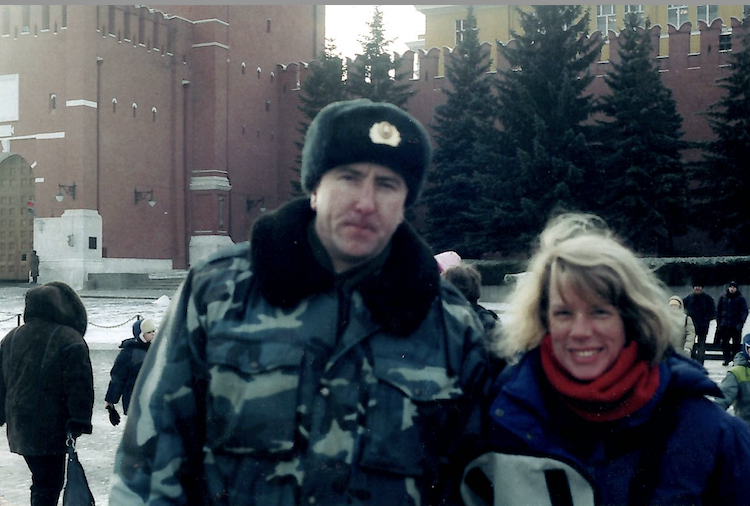
She traveled extensively doing that research. Before we met, she took two trips that greatly impacted her. One to Lenin’s Tomb in Moscow's Red Square and the other to the Oklahoma City National Memorial & Museum in Oklahoma City. They couldn’t be more different and yet, both were revered and designed to shape memory.
Closer to home, we spent countless hours at the Los Angeles Museum of the Holocaust, often sitting in front of the 65-screen video sculpture featuring the USC Shoah Foundation’s archive of more than 52,000 survivor testimonies. We would sit together listening to the stories. Wendy frantically scribbled notes she would later use in articles for various publications.
Memorials mattered to this girl. That’s why it still stings so terribly whenever I think of her tombstone.
When hospice arrived at our condo and they made Wendy as comfortable as possible, a woman pulled me into our living room and said, “I’ll need the name of your preferred mortuary.”
“Preferred,” I said, “I don’t use a lot of them. I don’t have a preferred. Can you tell me the name of one?”
No, she couldn’t. Nor could she provide a list that I could pick from. She recommended I jump online and Google to find one.
My wife had just been put into hospice. The doctors had told us there was nothing more to do. I was trying to hold everything together for me, Wendy, her mother and still try and get us to another day. The idea that I should calmly research mortuaries online felt surreal.
In my distress, I reached out to her aunt who wanted to know how she could be helpful. So, she and Wendy’s mother, Corinne, took on the task that evening and then returned the next morning. Her aunt sat across from me at our kitchen table and said, “It will be McKenzie Mortuary. I’ve picked out the blue urn. She’s going to be cremated, and Corinne will bury her in Cave Hill.”
I don’t remember if my mouth actually fell open, but I was absolutely shocked. Wendy and I had never once discussed our final resting places. Additionally, I thought because we’d been together for 11 years and legally married for 10 years, I might actually have some say in the matter. I had been assuming I could keep her ashes on a beloved bookshelf next to her books.
Stunned with the announcement that she would be taken back to the family plot in Louisville while I lived in Long Beach, California, I sat in silence as my brain tried to process it all. Not knowing what to do, I spun around in my chair to see Wendy on the couch in the living room. Just the day before, she’d lost the ability to type on the computer. She was baffled about how to do it. A task she performed daily was suddenly a mystery. She was also sleeping most of the day and I knew her final death march was in progress. As she lay there, I approached, knowing I would have to ask her the most difficult question I ever had.
“Babe,” I began, “Your mom wants to take you back to Cave Hill. Is that where you want to be?”
God love her, my wife was not very spiritual, but she uttered the most profound statement, “Burn me up, take me out. I won’t be there; I’ll be with you.”
Yes, there would always be a piece of Wendy Koenig in my heart. So, fine, I thought. They can take the ashes and bury them next to her father. It will be OK.
There were delays in the cremation due to a COVID backlog in Los Angeles County. Wendy’s mother had to return home before the ashes were released. However, because I'm a woman of my word, when I went back to Louisville, we buried Wendy's ashes exactly one year after her death.
When I tell people that grief is different for LGBTQ people, and they don't really understand what I'm saying, this is one of the stories that I share. It isn’t only about where Wendy was buried. It’s about how she was memorialized.
See, her parents bought that burial plot in the historical Cave Hill Cemetery after her father had been diagnosed with esophageal cancer. I know it wasn't the fact that Colonel Harland Sanders (of Kentucky Fried Chicken fame) and Muhammad Ali are also interred there, but more because he liked that section where a giant magnolia tree sat at the top of the ridge.
I understood why my mother-in-law would be distracted. She was not one to be in touch with her emotions and we were burying her only child. Instead of saying a few words or reciting a pray with me, she got into a very long-winded conversation with the grave diggers. She explained how she and her husband had picked out the rose-colored stone for their marker. She wanted to be sure that Wendy's stone would match.
They told her the decision would have to be made in the business office. My mother-in-law was not really one to delve into big business issues either. When the cemetery contacted her directly by phone because she was the owner of the plot, she couldn't decide on the inscription for the headstone. Thus, she designated that task to her power of attorney, her next-door neighbor.
I found out days later. And because my mother-in-law's health was also failing (she had been diagnosed with stage 4 cancer just weeks after Wendy died), I wasn't sure that the information she was conveying to me was correct. So, I inquired with the power of attorney.
“Is it true that you picked out Wendy’s headstone,” I asked, holding back tears.
“Well, Chris, it was just a matter of filling out her name and the dates. And then I chose a little dove to go on it.”
“And you didn’t think to call me?” I questioned.
“Well, we could have. But it’s done now.”
Now, I knew my girl. I know how much effort she put in to getting her PhD. I know that while she never asked anyone to call her Dr. Koenig, having that “Dr.” before her name was important to her. I would have included it in the engraving. I also knew the high value she placed on our marriage. We cherished it, fiercely and without hesitation. I definitely would have added the line: Beloved wife of Christine Koenig.
But that's not anything that I was allowed to discuss. The matter was done. Just official business. It was a task. A box to tick off the list.
I know that if I had been her husband instead of her wife, I would not have been sidelined in that important decision. It just never crossed anyone’s mind. I wasn’t seen, I wasn’t valued, and I wasn’t considered.
Every time I've gone to the grave site, I immediately burst into tears. It's not because Wendy's gone. I've made peace with that. She told me herself that she wouldn't be there. I cry because the stone feels incomplete. Because the woman who devoted her life to studying memory and memorialization deserved a memorial that reflected her fully.
For a long time, I told myself I had failed her. That I should have fought harder. That I should have stopped the engraving.
Instead, I chose respect. Southern restraint. “Bless their hearts,” as Wendy used to say.
I was respectful to people who weren't respectful to me.
But silence has a cost. That headstone has cost me hundreds in therapy bills — not because of what it says, but because of what it doesn’t.
And yet, I’ve come to understand something Wendy would have appreciated: the truest monument is the life carried forward. I honor her by being my best self, by advocating for LGBTQ spouses who are dismissed in their grief, by speaking about disenfranchised loss, by insisting our marriages are real and sacred.
Stone is permanent.
But love is louder.
Don’t miss future blog posts; sign up here and get them delivered directly to your email box.